

Mifepristone (RU-486): The Abortion Pill — A Deadly Legacy
Introduction
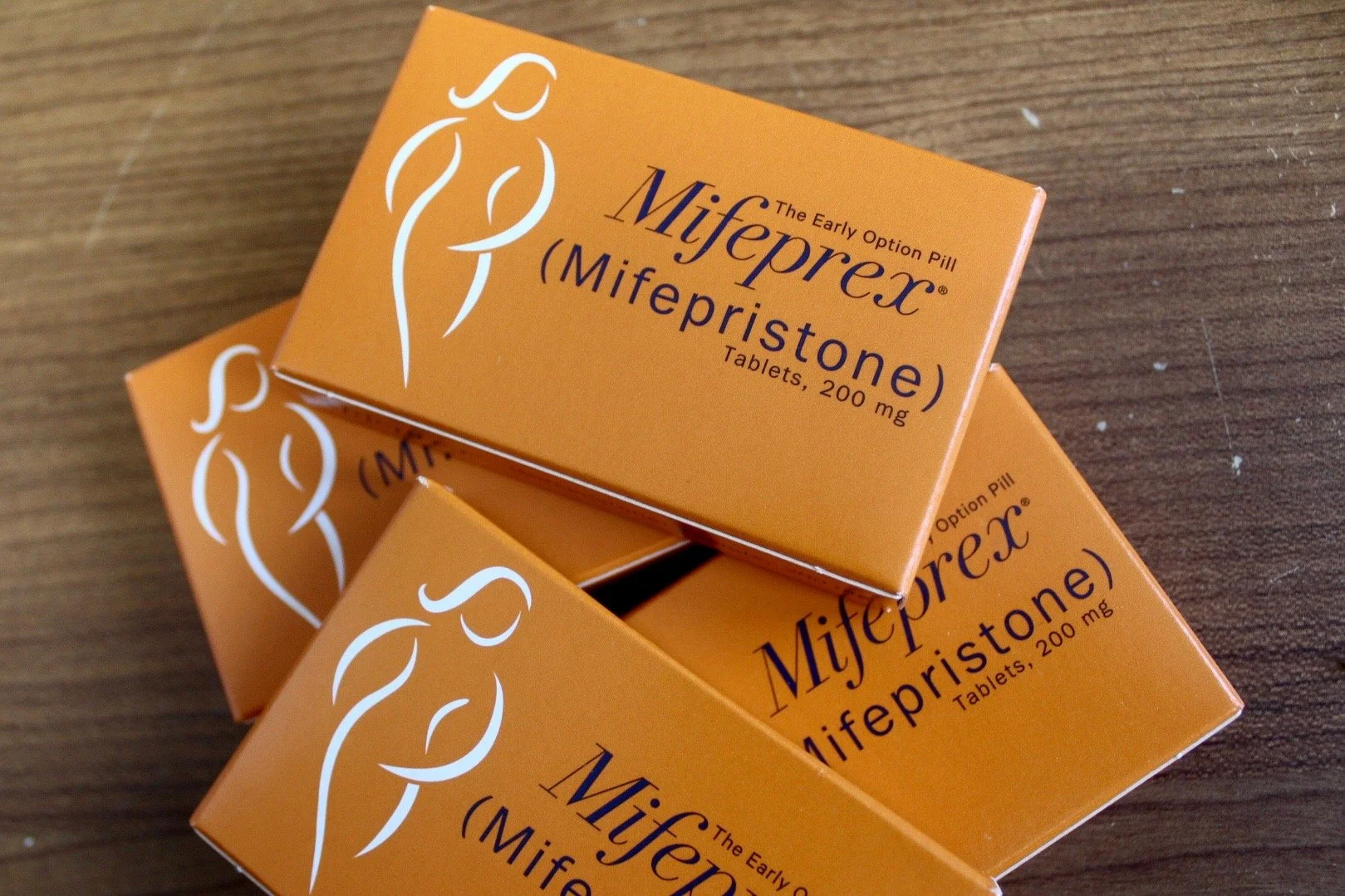
Mifepristone, also known by its original code name RU-486 and sold under the brand name Mifeprex, is the primary drug used in medication abortions in the United States. Approved by the FDA in September 2000, it has been used to kill over 5.9 million babies in America. This drug, developed with no regard for the unborn child's right to life, represents one of the most destructive innovations in modern medical history.
The Wicked Nature of Mifepristone
Mifepristone works by blocking the hormone progesterone, which is essential for maintaining a pregnancy. When progesterone is blocked, the uterine lining breaks down, the cervix softens and opens, and the baby is expelled from the mother's body. This is not a natural miscarriage—it is a chemically induced killing of an unborn child.
The drug is typically followed by misoprostol, which causes painful cramping and bleeding as the body expels the child. Women are often left to undergo this process alone in their bathrooms, isolated from any support, while their unborn children die inside them.
Since its approval in 2000, mifepristone has been associated with 151 documented deaths in the United States according to FDA adverse event reports, along with over 7,600 adverse event reports filed with the agency. These numbers include severe complications such as hemorrhage, infection, and incomplete abortion requiring surgical intervention, as well as long-term physical and psychological trauma for thousands of women. The FDA's own data reveals that deaths from mifepristone are four times higher than the agency initially acknowledged. A landmark 2025 study by the Ethics & Public Policy Center analyzed insurance claims data from 865,727 prescribed mifepristone abortions between 2017 and 2023—the largest real-world study of the drug to date. The findings were alarming: 10.93 percent of women experienced serious adverse events within 45 days, including sepsis, severe infection, and life-threatening hemorrhaging. Additionally, at least 5.26 percent of women required a second abortion attempt within 45 days because the first failed, exposing them to repeated trauma and additional medical risks. These real-world outcomes starkly contrast with the controlled clinical trials that formed the basis of FDA approval, revealing a far more dangerous profile than originally reported.
The Unholy Communion
Mifepristone (RU-486) is administered in a two-part oral regimen. Where the Lord's Supper declares, "This is my body, given for you," the abortion industry declares, "This is my body, my choice". Jesus’ body was offered in love, His innocent blood poured out to purchase our salvation. The unborn child’s body and innocent blood is poured out as a demonic sacrifice to fuel the enemies of Yahweh. RU-486 perverts the sacred act of communion into something un-holy: where Christ's body brings life, the abortion pill brings death; where the Eucharist unites us to God and to one another, mifepristone isolates women in their bathrooms, alone with their dying children; where communion is a covenant of life and sacrifice, the two pills are a covenant of death and abandonment. This is not merely a medical procedure—it is a demonic counterfeit, a dark parody of communion. The first pill kills the body, then the second pill produces the flow of blood - the opposite of the bread (“this is my body”) and the wine (“this is my blood”). The creator of life is replaced by the destroyer, and the table of blessing becomes an altar of death.
A Dark Lineage: From Nazi Gas Chambers to American Bathrooms
The development of mifepristone carries a horrifying historical lineage. The drug was originally developed by the French pharmaceutical company Roussel Uclaf in the 1980s. In 1997, Roussel Uclaf was acquired by Hoechst AG, a German chemical conglomerate. Hoechst AG was the legal successor to IG Farben, the chemical consortium that manufactured Zyklon B—the cyanide-based poison gas used by Nazi Germany to murder approximately 1.1 million people in gas chambers at Auschwitz-Birkenau, Majdanek, and other extermination camps during the Holocaust. The same company that chemically enabled the Holocaust of WWII, is enabling the modern day holocaust of the pre-born.
FDA Approval Timeline: A History of Relaxing Safeguards
The FDA first approved mifepristone (Mifeprex) on September 28, 2000, for killing the child through the first 49 days or seven weeks gestation. This initial approval came with strict requirements including in-person dispensing at clinics or hospitals, physician supervision, limited gestational age, and mandatory follow-up visits. In 2016, the FDA expanded the approved gestational limit from seven weeks to ten weeks or 70 days, increasing the number of annual deaths with the drug. On April 11, 2019, the FDA implemented a Risk Evaluation and Mitigation Strategy (REMS) for mifepristone, which included certification requirements for prescribers, dispensing restrictions, and patient monitoring protocols.
However, on January 3, 2023, the FDA made a controversial decision to relax the REMS requirements. The agency eliminated the in-person dispensing requirement, allowed mail-order distribution, reduced physician supervision requirements, and expanded access to abortion pills through telehealth. This deregulation opened the floodgates for mail-order abortion pills, allowing death on delivery to doorsteps across all 50 states.

Hear, O women, the word of the Lord,
and let your ear receive the word of his mouth;
teach to your daughters a lament,
and each to her neighbor a dirge.
For death has come up into our windows;
it has entered our palaces,
cutting off the children from the streets
and the young men from the squares.
(Jeremiah 9:20-21)
Death has come into our homes too—through our mailboxes.
The Current Legal Battle
The legal landscape surrounding mifepristone is complex and constantly evolving. Below are the active cases that currently threaten or defend fetal life protections:
Federal Cases
Louisiana v. FDA — Oral arguments occurred on September 9, 2026 before the 5th Circuit. Louisiana is fighting to reinstate nationwide in-person dispensing requirements that would block mail-order abortion pills. This is our most important case. If we win, death will be blocked from flowing through the U.S. mail to every state. We are awaiting a decision on the case. Key prayer points:
Pray for the three judges making the decision - Steven Higginson, Dana Douglas, Priscilla Richman.
Pray that Louisiana is recognized as having “standing” in the court (Esther 5:2)
Revelation 5:8 - That justice would be poured out of the bowls filled with our prayers.
A righteous and just decree from the bench, Psalm 89:14.
Louisiana v. New York — Supreme Court of the United States, original jurisdiction, not yet accepted. Louisiana, Arkansas, and Alabama asked the Court on September 30, 2026, for leave to sue New York, California, and Massachusetts over their abortion shield laws. They say those laws block extradition, judgments, and subpoenas and so violate the Full Faith and Credit Clause and other constitutional limits. The Court has to decide whether to let the case be filed before any briefing on the merits.
Florida v. FDA — Challenging the FDA's original 2000 approval AND its generic approval. Texas and Florida are attacking the drug's very legitimacy. It goes after the 2000 approval, the 2016/2021/2023 changes, the generic approvals, and invokes the Comstock Act. On August 30 the court denied the manufacturers’ motions to dismiss and stayed the case until December 1, 2026, or completion of the FDA safety review, whichever is first.
Missouri v. FDA — Active in the Eastern District of Missouri federal court. Missouri, Kansas, and Idaho are challenging FDA's approval process. The court allowed their challenge to proceed, and the case is now on appeal. The oral argument date is awaiting a date.
Whole Woman's Health v. FDA — Abortion clinics are seeking to remove ALL REMS restrictions on mifepristone. This is a major threat—if they win, abortion pills could be mailed without any safeguards or oversight. Filed in U.S. District Court for the Western District of Virginia. Summary judgment briefing is complete; ruling pending.
Mayday Health v. Rhoden — South Dakota banned advertising for abortion pills, but the court blocked the state from enforcing the law. Filed in U.S. District Court for the District of South Dakota (federal district court); appeal to the 8th Circuit. The oral argument date is awaiting a date.
Bryant v. Moore — North Carolina imposes stricter requirements on mifepristone than the FDA (physician-only prescribing, in-person dispensing, follow-up visits). The district court ruled these restrictions are preempted by federal REMS, but the state appealed. Following the 4th Circuit's GenBioPro decision, the case resumed. Oral arguments are scheduled for tentatively for October 27-30, 2026 before the U.S. Court of Appeals for the 4th Circuit (federal appellate court). If North Carolina wins, it sets a precedent allowing states to add safeguards beyond federal requirements.
Louisiana v. Nouhavandi — Federal court, U.S. District Court for the Western District of Louisiana, Lake Charles, Judge James D. Cain Jr.,. Louisiana, Arkansas, and Alabama sued on September 30, 2026, naming out-of-state prescribers and mail-order networks — including the Nouhavandis, Aid Access-linked groups, Remy Coeytaux, and the Massachusetts Medication Abortion Access Project — for shipping abortion pills into their states. They ask for an injunction, penalties, and damages under public-nuisance and unfair-trade law. Summonses issued October 1. This suit is against the shippers, not the FDA.
State Court Cases
Birthmark v. Louisiana — Louisiana attempted to classify mifepristone and misoprostol as controlled substances to add safeguards, but the court granted a preliminary injunction on August 25, 2026, blocking enforcement. Filed in Ninth Judicial District Court for East Baton Rouge Parish, Louisiana (state court). Trial is set for January 15, 2027.
Texas v. Aid Access — Texas is suing Aid Access, the world's largest abortion pill distributor, for shipping pills to all 50 states. Filed in District Court of Galveston County, Texas (state court). Awaiting further action on this case.
Texas v. Lynch — A Delaware nurse practitioner is mailing abortion pills to Texas residents. Filed in District Court for Jefferson County, Texas (state court). This case is still awaiting hearings.
Texas v. Ulster County Clerk — Texas already has a default judgment and injunction from Collin County against a New York doctor who mailed mifepristone to a Texas woman; New York’s clerk refused to file that judgment under the state’s shield law. This appeal is the fight over whether a shield state can nullify a sister-state judgment against an abortion-pill shipper. Court date is pending.
Florida v. Planned Parenthood — Florida’s attorney general is suing Planned Parenthood for telling women mifepristone is “safer than Tylenol,” which the State calls a false claim that hides hemorrhage, infection, and incomplete-abortion risks. The motion to dismiss was denied in May 2026; the State is seeking large civil penalties tied to chemical abortions performed under that marketing. Court date is pending.
Missouri v. Planned Parenthood — Missouri is using consumer-protection law against Planned Parenthood’s public claims that the abortion pill is safe. The theory is that downplaying mifepristone’s complications is a deceptive trade practice, not protected “health education.” Court date is pending.
Conclusion
Mifepristone represents one of the most wicked innovations in modern medical history—a drug developed with no regard for the unborn child's right to life, produced by a company with ties to Nazi-era chemical weapons manufacturers, and approved by an agency that has systematically dismantled safeguards to expand access to abortion pills. The legal battles ahead are critical. Every ruling that strikes down state restrictions enables more deaths. Every victory for states defending unborn children saves lives. We must remain vigilant, prayerful, and active in this spiritual warfare for the sanctity of human life.