While working at Planned Parenthood, Dr. Patti saw the raw, inside workings of the abortion industry and the lies it tells patients and the public. Here is her list of the top ten lies the abortion industry wants you to believe.
Even though Dr. Patti performed surgical abortions, the lies are the same. In fact, with the abortion pill regimen, the risks and complications are worse. One estimate puts the complication rate at four times higher.

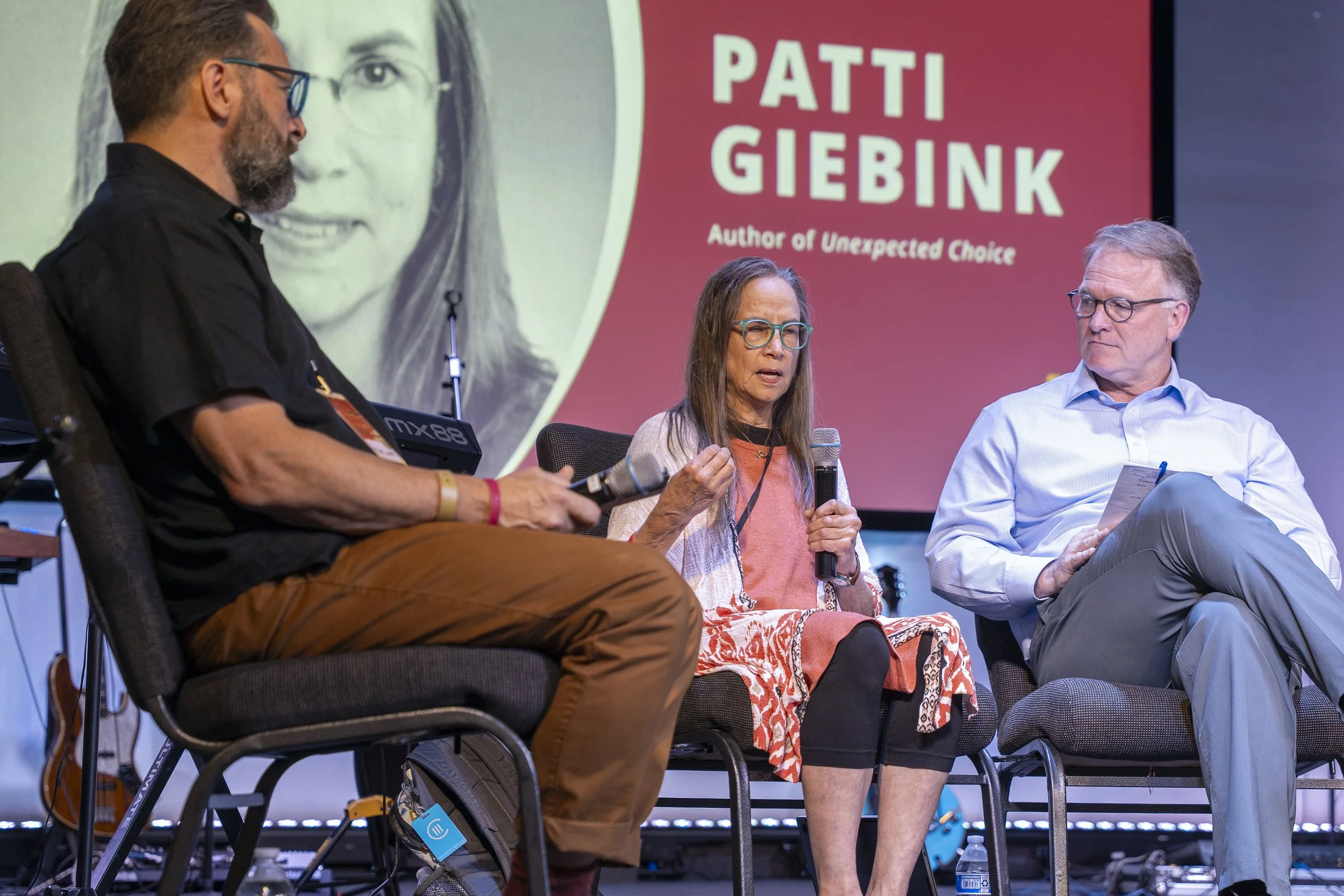
Dr. Patti Giebink was an abortion provider for Planned Parenthood in South Dakota before becoming pro-life. As a board-certified OB/GYN, she spent over 30 years delivering babies in the United States and overseas before retiring from active practice. Dr. Patti is the author of Unexpected Choice: An Abortion Doctor’s Journey to Pro-Life. She is now a speaker and writer who also testifies before legislatures and courts on pro-life issues.
TOP TEN LIES
1. “Women seek abortions of their own free will.”
NOT! So many women are pressured, manipulated, and even coerced into abortions they don’t really want. It may be subtle: “My dad would kill me if he knew…” Or, “My parents threatened to throw me out of the house if I didn’t have the abortion.”
I even met a woman whose husband put a gun to her head and told her to choose—her life or the baby’s.
2. “Women consult their doctor, their pastor, and other resources, fully understand what they are doing, and are 100% sure of their decision.”
NOT! So many women I saw were conflicted, ambivalent, and not at all sure of their decision. Often, they were looking for answers but instead were “processed” like an assembly line.
Now, with abortion pills available online, it is even easier to be “processed.” The questions, multiple-choice answers, and clicks are designed to move you to the next set of questions.
3. “Just like any other medical procedure, women are fully informed of the risks and complications.”
NOT! Without an in-person visit with a medical professional, there may be no meaningful discussion of what could happen or what to do if something goes wrong.
Especially now, with abortion pills, women are told, “It’s like a bad period.” Instead, women report that the bleeding is profuse. One young woman ran out of towels to soak up the blood!
Unlike surgical abortion, with medication abortion, the bleeding can be worse, and you are most likely alone. With excessive blood loss, a woman can become weak, sometimes disoriented, and unable to call for help.
Like the bleeding, the pain can be far worse, and usually no pain medications are prescribed. Anyone who knows someone who has undergone a miscarriage understands the degree of pain and fear.

4. “It’s not really a baby until it’s born.”
NOT! When I performed surgical abortions, at the completion of each procedure, I would take the “products of conception” (POC) to my lab and reconstruct the fetus.
This was to ensure that no tissue (or body parts) had been left inside to cause bleeding or infection. Only twice did I have to go back and retrieve tissue left behind.
But with medication abortion, the risk of retained tissue or incomplete abortion is much greater, which contributes to the higher rate of complications—estimated in one study to be four times greater.
And now, a woman delivers at home, where the fetus/POC may be in full view for her to see and identify.
One woman reported thinking, “Now what do I do with it?!?”
5. “It is safer to have an abortion than to have a baby (carry a baby to term).”
NOT! Statistics from Finland have challenged this claim. Women who carry a baby to term have been found to be less likely to die over a period of time.
In fact, women who have full-term babies have a lower risk of breast cancer. It appears that having a baby has a protective effect on the breast.
6. “Making abortion legal decreases maternal mortality.”
NOT! Chile, a country with excellent statistical records, has provided evidence to the contrary. Maternal mortality continued to decline after the country prohibited abortion in 1989.
Researchers examining Chile’s experience identified several important factors in reducing maternal mortality:
Education of women.
Trained birth attendants.
Access to appropriate care for high-risk pregnancies.
7. “An in-person visit is not necessary before acquiring abortion pills.”
NOT! In 2023, the FDA formally removed the requirement that abortion medication be dispensed in person. This change opened the floodgates for online access to abortion pills.
Now, without an in-person visit, there may be inadequate screening for risks such as ectopic pregnancy (a life-threatening emergency), advanced gestational age, Rh factor, anemia, and other potentially serious risk factors.
And without a follow-up visit to confirm the results, you may be left on your own.
8. “Prior to an abortion, every woman has considered other options, such as adoption or available resources to help her keep and raise her baby.”
NOT! Most women feel they have no choice and are afraid to look at other options.
Most, if not all, abortion websites do not even mention alternatives or resources such as Pregnancy Resource Centers (PRCs) or faith-based programs offered by the Catholic Church or Lutheran Social Services.
9. “There has been enough data collected to determine the safety and efficacy of abortion pills.”
NOT! The FDA reviewed its Risk Evaluation and Mitigation Strategy (REMS) requirements in 2021. However, questions remain about the evidence considered and whether the agency gave adequate consideration to concerns raised by pro-life medical organizations.
Groups such as the American Association of Pro-Life Obstetricians and Gynecologists (AAPLOG) and the Charlotte Lozier Institute have challenged the FDA’s conclusions.
Additional data, patient stories, and statistics on the outcomes of medication abortions are needed. Hopefully, there will be better, more reliable recommendations soon.

10. “Abortion should be safe, legal, and rare.” — Bill Clinton
NOT! President Clinton pushed for the FDA to approve the abortion pill for American distribution.
Now, 26 years after its approval, it is clear that the abortion pill is NOT safe.
It is NOT legal when abortion providers in pro-abortion states routinely ship abortion pills into states where abortion is prohibited. There are also serious questions about violations of the federal Comstock Act.
And it is NOT rare. Thanks in part to mail-order abortion pills, some estimates show abortions have increased each year since Roe v. Wade was overturned.
PRAYER POINTS
Pray that the church will become informed about the abortion pill and stay informed.
Pray for the pro-life movement to develop and grow in the “art of persuasion.”
Pray that the pro-life church will suit up (Ephesians 6:11), show up, and be prayed up!
Pray that we will “be strong in the Lord and in the strength of his might” (Ephesians 6:10).