
When someone emphatically tells you, “Nothing to see here,” that may be precisely where you need to shine a spotlight.
On May 13, Senator Patty Murray (D-WA) confronted Environmental Protection Agency (EPA) Administrator Lee Zeldin during a Senate Appropriations hearing over reports that the agency was examining whether abortion drugs could be entering America’s water supply.
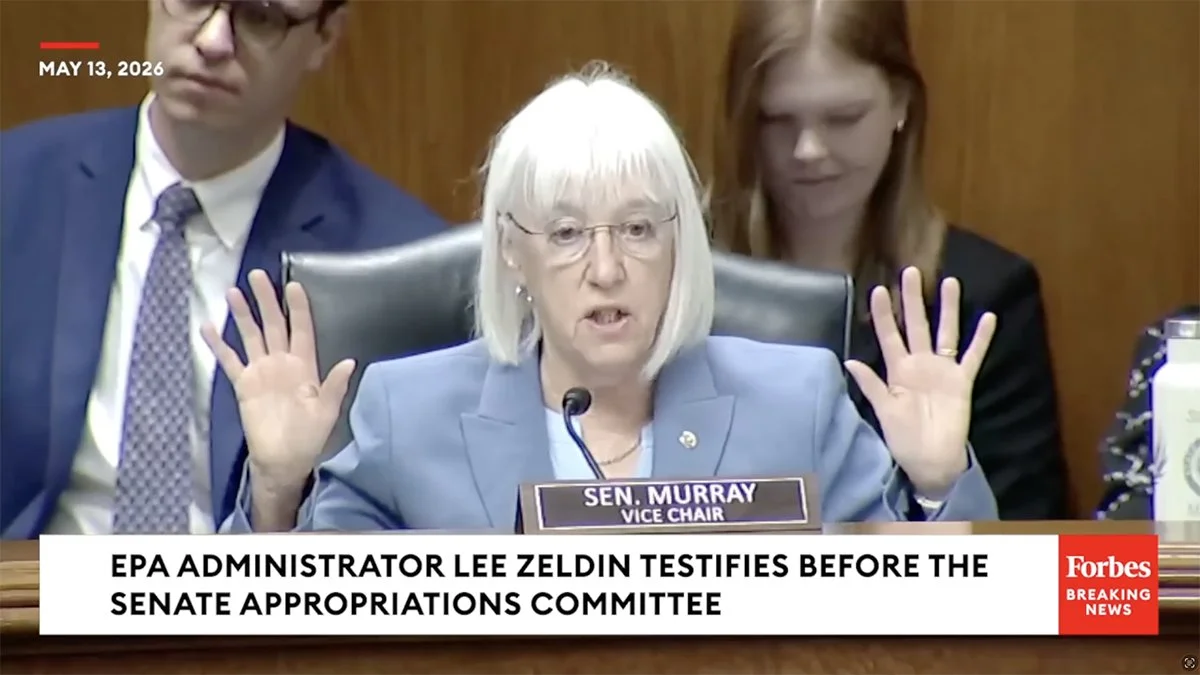
Murray was visibly frustrated by the subject.
She characterized the concern as a “radical conspiracy” and pressed Zeldin with a pointed question:
“But do you seriously believe there’s abortion in the water, like some of the far-right activists have suggested?”
Five months later, Murray is leading an effort to stop the very scientific investigation she dismissed.
Senate Democrats Want to Block EPA Investigation
On October 15, Murray led the entire Senate Democratic caucus in sending a letter to EPA Administrator Zeldin urging the agency to remove mifepristone and misoprostol, along with their metabolites, from a planned drinking-water surveillance study.
The letter makes an emphatic assertion:
“There is no scientific evidence – recent or otherwise – that demonstrates a need for an EPA surveillance study on misoprostol…there is no scientific evidence that would support mifepristone and misoprostol as candidates for surveillance by the EPA”
They point to a 1996 FDA environmental assessment that anticipated no significant environmental effects from mifepristone—four years before it was approved for distribution.
But that raises an important scientific distinction.
An environmental assessment predicting no significant adverse effects is not the same as a current study measuring whether a chemical is now present in drinking water.

What Happens to the Abortion Pill After It is Taken?
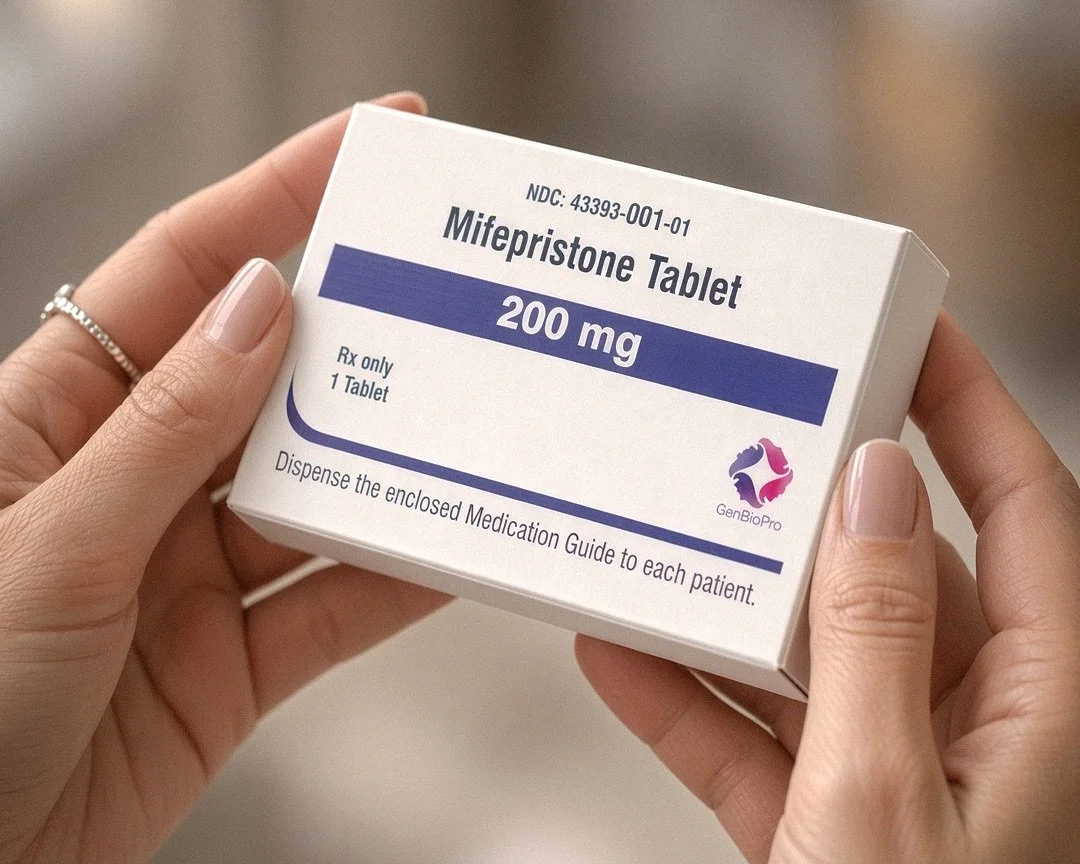
Medication abortion typically involves two drugs: mifepristone, which blocks progesterone, and misoprostol, which causes the uterus to contract and expel the pregnancy.
These abortions usually occur at home, where pregnancy tissue may be expelled into a toilet. The drugs and their metabolites are also eliminated from the woman's body into the wastewater.
Mifepristone has an elimination half-life of approximately 18 hours. Research using radiolabeled mifepristone found that approximately 83% of drug-related material was recovered through feces and 9% through urine over an 11-day period.
It establishes that drug-related substances leave the body through routes that can enter municipal wastewater systems.
Here's the troubling reality: Conventional wastewater treatment plants were never designed to remove every pharmaceutical compound. Some drugs and their metabolites can survive treatment and enter rivers, lakes, and other waterways that supply our drinking water.
This raises a consequential question: If mifepristone and its biologically active metabolites enter municipal wastewater systems, are treatment plants capable of removing them before that water returns to the environment?
We don't have a definitive answer. And that's precisely why investigating the question matters.
A study published July 20, 2026, in Issues in Law & Medicine, titled Anti-Progesterone in Environmental Water, adds another dimension to this concern. Researchers tested water samples from three American cities and reported detecting anti-progesterone activity, including in municipal tap water. Most strikingly, Austin, Texas, tap water displayed elevated RU486-equivalent activity—higher than either of the city's upstream or downstream water samples.
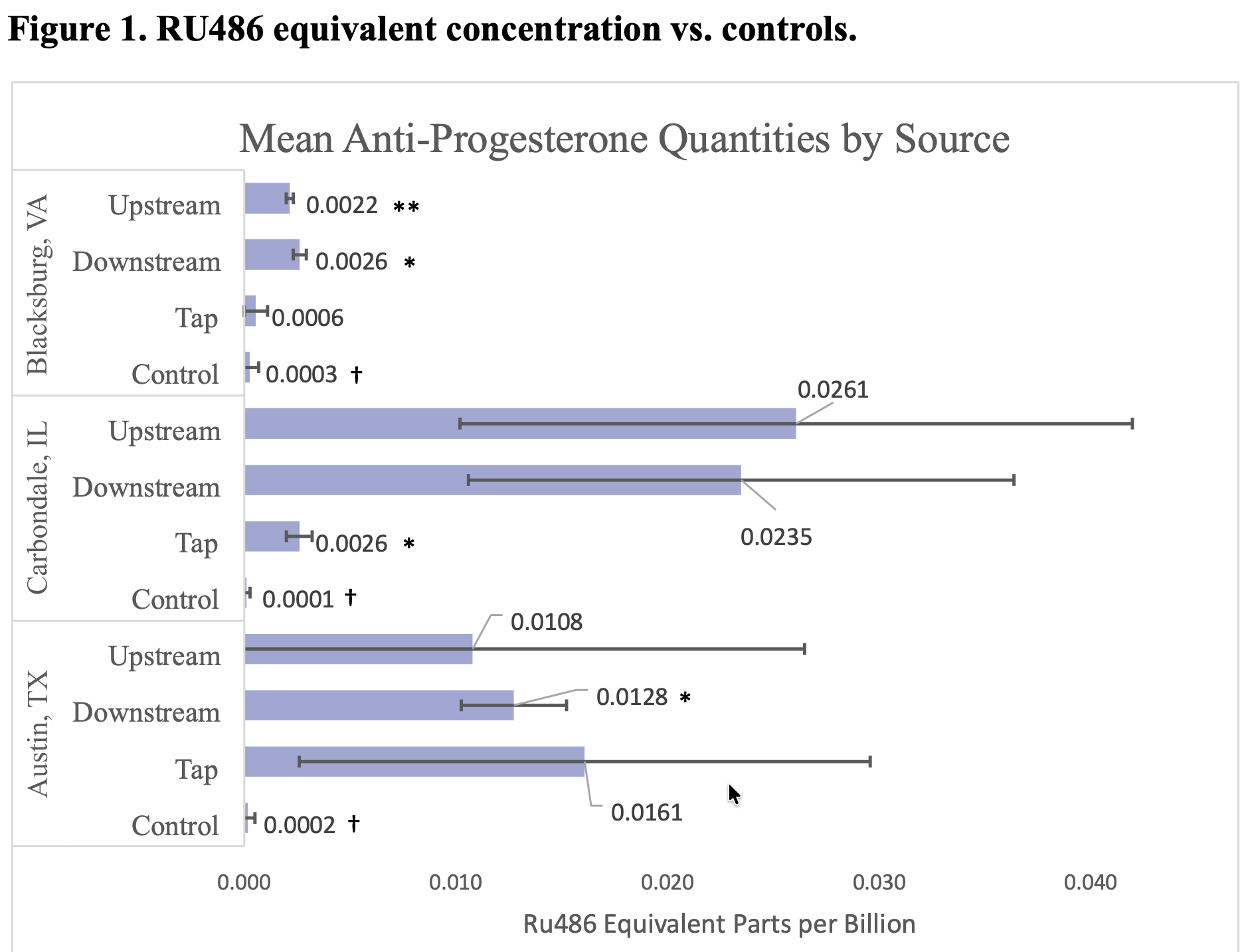
The findings are significant because mifepristone works by blocking progesterone. However, the researchers used a biological assay that detects anti-progesterone activity rather than chemically identifying mifepristone itself. Other compounds could potentially produce the same response. While the study does not conclusively establish that mifepristone is present in drinking water, it raises questions that warrant further investigation.
What Will the EPA Do Next?
In their October 15 letter, the senators demanded that the EPA explain the scientific and regulatory basis for including abortion drugs in its surveillance study. They also requested information about the agency's methodology, timeline, and communications with outside organizations.
The outcome matters because the controversy involves two different questions: whether there is sufficient preliminary evidence to justify federal monitoring, and what properly conducted monitoring might reveal.
The deadline for the EPA's response was October 31. The deadline for the EPA's response has now passed. As of this writing, no response has been made publicly available.
The Question Remains
Is mifepristone present in America's drinking water?
If so, at what concentrations? Can existing treatment facilities remove it? What happens to its metabolites? And could prolonged exposure create risks that have not yet been adequately evaluated?
The controversy over the abortion pill now centers on whether the EPA should undertake surveillance to investigate possible environmental exposure.
Whatever the agency ultimately decides, the scientific basis for that decision deserves careful examination.
When the public is told there is nothing to see, the appropriate response is precisely to examine the evidence more closely.
PRAYER POINTS
Pray for EPA Administrator Lee Zeldin to have wisdom and discernment as he determines how to proceed with the investigation of mifepristone in America's drinking water.
Pray that the EPA investigation will be free from intimidation, manipulation, and falsehood, and that the truth will be fully revealed.
Pray for a great exposure of the abortion pill that pierces the hearts of Americans and subpoenas the conscience of the nation.